
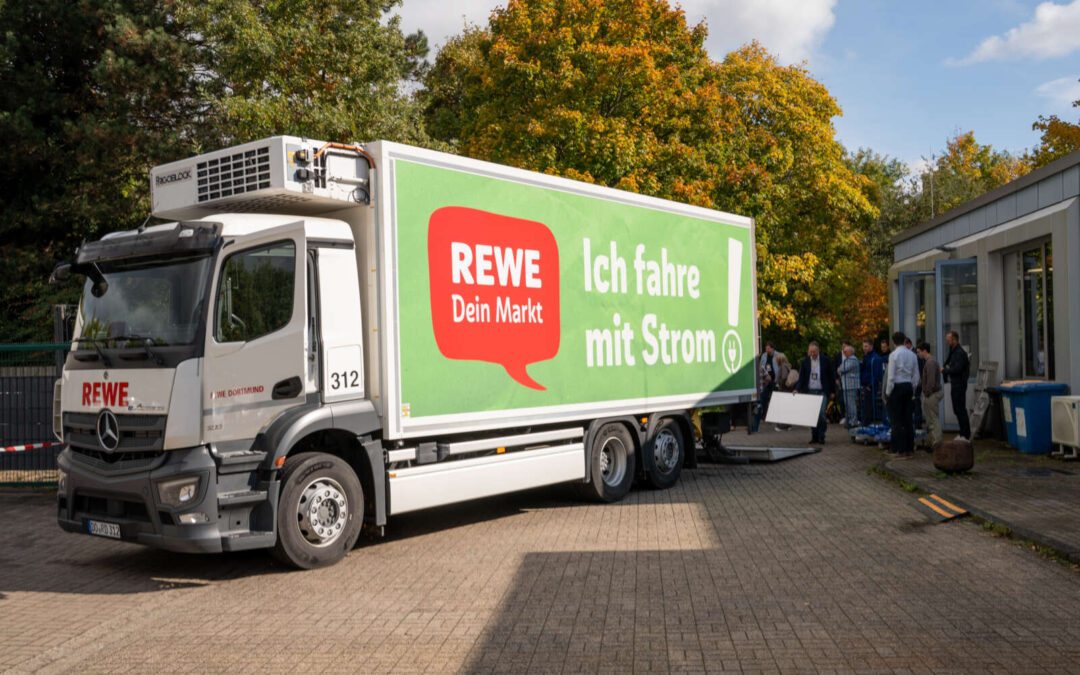
How can companies use electromobility to make their urban logistics more efficient, sustainable and at the same time more compatible with the city? This question was the focus of the user day “Electromobility in commercial transport – opportunities for low-noise logistics in our cities”. The event was organized by the SNAP transfer project, which was carried out as part of the Logistics and IT Performance Centre.
Electromobility creates new scope for urban supply
Electromobility and low-noise technologies open up new possibilities for deliveries in cities. While roads and loading zones are heavily frequented during the day, e-trucks and low-noise loading and unloading processes can shift delivery processes to night and off-peak hours – efficiently, with low emissions and with a high level of acceptance among the population. This offers companies opportunities to make their logistics processes more flexible, make better use of time slots and at the same time contribute to a better quality of life in urban areas.
Practice meets research: a day full of inspiration
After the welcoming address by Prof. Dr. Alex Vastag, Head of Transport Logistics at Fraunhofer IML, the program offered practical insights into current strategies and technologies for low-noise logistics:
- Marvin Gehrke (Berlin Senate Department for Mobility, Transport, Climate Protection and the Environment) presented experiences from the capital on sustainable commercial transport.
- Axel Hübel (Peutz Consult GmbH) compared the noise development of diesel and electric vehicles and showed where electromobility offers real advantages.
- Birgit Heitzer (REWE-Zentralfinanz eG) presented findings from the supply of REWE stores with low-noise concepts.
- Bartek Lercel (ALDI SÜD) reported on practical experience with e-trucks in daily use.
In the afternoon, Arnd Bernsmann (Fraunhofer IML) presented the SNAP tool, which can be used to identify potential and suitable areas for night logistics – a practical tool for companies that want to implement quiet delivery concepts.
Exchange and outlook
In the subsequent “World Café”, participants from business, science and administration discussed the key questions:
What framework conditions are needed for low-noise logistics? Where is the greatest potential for the use of e-trucks? And how can delivery transports be organized economically during off-peak times?
The results made it clear that electromobility offers companies the opportunity not only to reduce emissions, but also to realize economic benefits through more flexible delivery times and better utilization of infrastructure.
Photos: Fraunhofer IML/Vinzenz Neugebauer


